This blog contains my personal memoirs of my travels, experiences and adventures into the wilds of Sri Lanka. I hope that through this blog I can impart my love for this wonderful country and its natural beauty to the reader and encourage them to conserve and preserve this heritage for future generations.
Hop on to the Ultimate Island Safari with Classic Sri Lanka! 13N/14D
Package Includes: Accommodation and Meals as per Itinerary All transfers in comfortable air conditioned vehicles Guided by the best naturalists in the country Entrance Tickets as mentioned on Itinerary Safari Jeep Rides Whale Watching Plane Rides Four Mineral Water Bottles per person per day Leech Socks & Insect Repellent Welcoming at Airport with garlands and care package for each guest 24 hour Concierge Service Wi-Fi Facility during road transfers
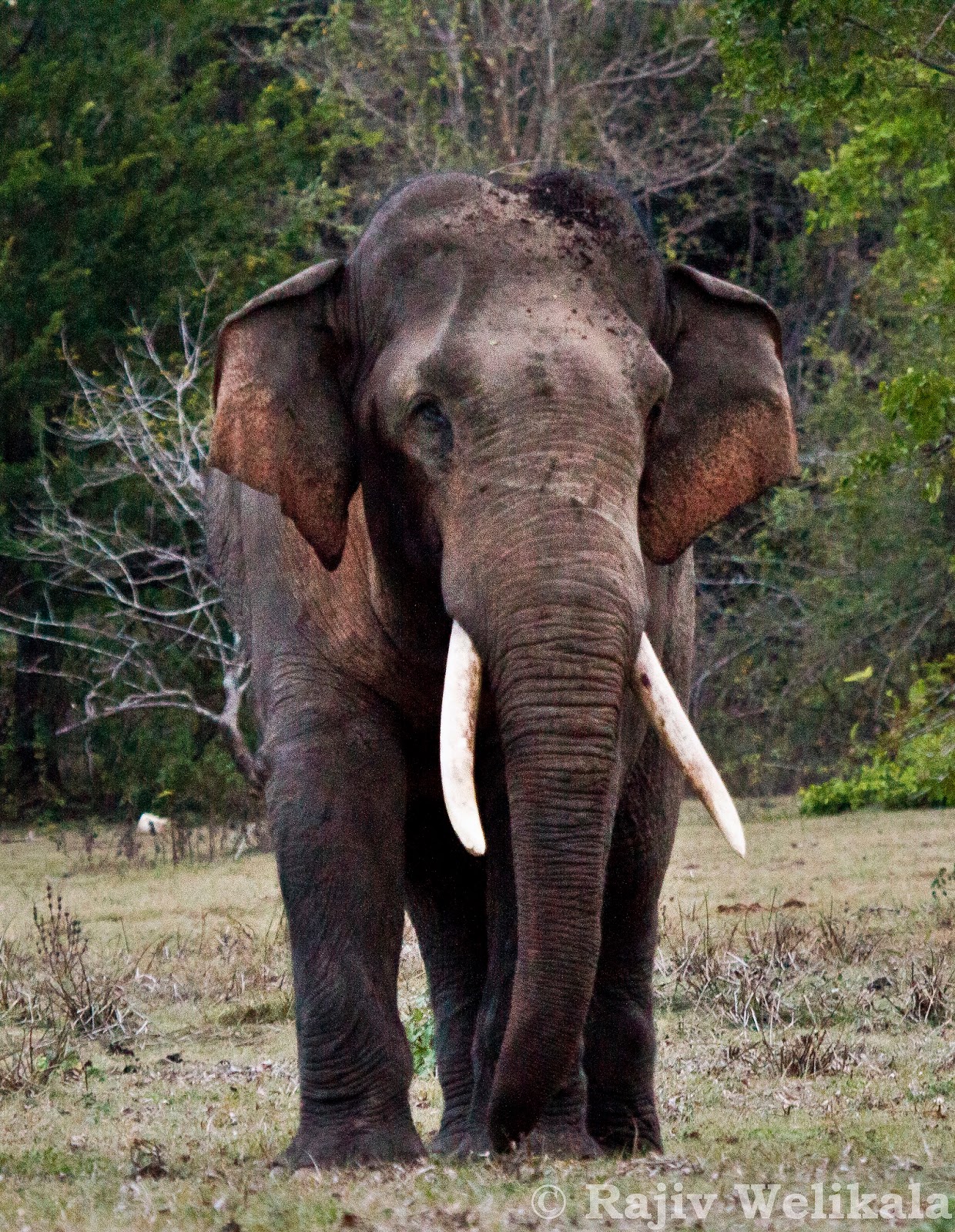
My story with Gajaba the mighty tusker found in
the North Central region of the country , starts over 5 years ago, with a
random video clip seen on facebook of this gigantic specimen of an elephant
patrolling a lake bed along with a herd of elephants. The bull was
significantly taller than all the elephants around, and I was amazed at the
sheer size and majesty of this elephant.
I spend many months trying to get more details
about him, and befriended a local in the area who would end up
becoming a very close friend and ally in conservation of elephants in this
area.
Sadly elephants in the area are found outside
national parks, and in and among human habitats. They are in eternal conflicts
with people and there are major casualties on both sides. People as well are
struggling to eke out a living farming and the elephants who have nowhere else
to go, are tempted by the nutritious crops which are grown by the villagers and
will raid them at night. A single harvest of a poor villagers will be eaten in
one night, hence it is not a surprise that people retaliate. At its most basic,
the elephants are chased away by large fire crackers issued by the
Department of Wildlife, but some people take it to the next level and using
rudimentary shotguns will attempt to harm the elephants, which at most cases
end up with grievous injuries, which maim but do not kill. This makes the
situation worse and these enraged elephants will be even more aggressive and
dangerous. In much worse cases the young would fall victim to homemade
explosives such as Hakka Pattas which are originally intended for wild boar but
unsuspecting young elephants are easy prey and many a young animal are found
either killed or with shattered jaws. Another means of harm for elephants are the
large unprotected agricultural wells. Both adult and young elephants fall into
these dangerous pits which are without any walls and in worse cases the
elephant either drown or are permanently injured beyond recovery. Another sad
state which I have observed I these areas are when the herds come out to drink
at local lakes and tanks, which are generally bordering forest, how some youth
whom tent in the lake area having alcohol, going over and chasing the elephants
and panicking the herds just for the kicks. this is harmful I that not only do
the poor animals have no means of drinking water peacefully but the panicked
animals will run amok on another village., hence no good would come of this,
but it is happening on a daily basis and something I have seen in my own eyes.
The tusker whom I am writing about, was hence
found in an area of such turmoil, hence from the onset I know my search is not
going to be easy. My search began in 2013, and after news of him coming out to
the open in the dry season, I started travelling to this region on a regular
basis. Usually we hired a jeep from a nearby national park, and traverse the
many village roads, lakes and abandoned chena cultivation's, asking for
information where the elephants were last seen, and if any noises can be heard
from the forest such as breaking branches which are a clear sign of the
pachyderms being nearby. But even if there were elephants nearby there is no
guarantee that the tusker in question will be there. There are hundreds of
elephants in this region, and to pinpoint this particular tusker is like
finding a needle in a haystack. Despite all the obstacles ahead of me, I never
gave up. I traveled so often in search of him that I have lost count. I do
remember many an occasion where I have risked my own life to try and find this
amazing bull. I can remember the time when we walked into a reed bed in search
of him, and were hidden among the reeds where the herd of elephants surrounded
us. We remained silent and calm until they went into the forest, but I realized
this was too close for comfort and a risk I shouldn’t have taken.
My first sighting in 2013
Gajaba Running into the forest after seeing us in 2013
My first sighting in 2013
But the yearning to see and photograph this
magnificent bull kept me going. On one fateful day, we got news that he has
been sighted on a lakebed and hence I took leave and immediately made our way
to the area alone with a few other elephant enthusiasts. We waited for quite some
time and at around 5 PM the herd started gradually coming out into the open.
The elephants kept pouring out, from young calves to adolescent bulls trying to
get the attention to the females as well as mature bull elephants. There were
over 100 elephants in this herd, and around5-6 tuskers, of various sizes. This
is a very rare occasion as only a few of the males in Sri Lanka have ivory. But
my patience was wearing thin, and it was getting dark and we were about to walk
back when we were told from some others nearby that the tusker is slowly coming
out into the open. We waiting and out he came, but it was so dark my camera
back them was unable to capture anything significant. But the bull was
magnificent, which amazing muscular body and log tusks. He walked parallel to
us, and as soon as he came in front of us, he stopped, turned towards us, gave
a good look and ran back in. He is very shy by nature and this is the reason he
has survived so log without getting killed. I was nevertheless in awe, and
amazed at finally seeing him, but of course wasn't 100 percent happy as the
images I wanted didn't materialize. I was determined to see him again, and
hence continued on my quest for many years to come. But so many times I either
missed him by a few minutes or was a little too early and hence this mythical
tusker kept evading me for all these years.
Finally in 2016, I went once more, with a blind
hope that I had since 2013, with the sense that I will see this magnificent
bull tusker, perhaps the last of his kind in terms of genetics producing such a
large physique.
We went into a massive lake bed, hoping he would
show up there. There were few elephants out in the open, but the big bull was nowhere
to be seen, then we got a call from one of my trusty trackers that he’s
in a lake closely. hence using our hired jeep we traversed via bumpy roads and
made our own path sometimes over abandoned paddy fields etc to finally make it to
the lake. And there he was in the edge partially hidden it he forest. He was
with a few younger elephants. and after we came there, he went inside the forest.
We waited patiently and after a few minutes the bull slowly stepped out. His full
size and majesty was out for everyone to see. The local villagers having baths
in the lake were equally amazed by the tuskers size and majestic appearance as
he was strutting around clearly in full musth. He was showing particular
interest in a female, but she was so small, and was almost half his size. If
she is in heat he will continue to follow her till he gets the chance to mate
with her. This was finally the moment where all my years of travelling and
suffering with thousands upon thousands of rupees spent are rewarded with this
amazing sighting which I will never forget for the rest of my life.
After many hours spend admiring this spectacle,
we decided to head back home, full of memories and the small hope that this
bull will continue to paws on his genera and remained free to roam the lands of
Lanka till his drying day. Few years later, once again, we got
news of his appearance in a village tank, and I had just finished guiding a
client in Wilpattu, and decided to head over the area where hes been seen with
my trusty safari driver. Reaching the area, I met up with my local friend and headed to the lake where hes said to have been seen. When I
arrived there were a few photographers from Colombo already there and waiting
for him. I crouched down and crawled upto a small embankment, and on the other
side of this was a small herd of elephants, and our friend Gajaba among them.
He was feeding peacefully and strolling among the herd while in musth seeking
out any receptive females. We spent the entire evening with him
and the herd, and it was simply magical. I noticed how comfortable hes got over
the years since I first saw him to the presence of people, as he was completely
at ease with our presence.
It was also heartwarming to see a
very young tusker, almost 1/10th his size playing by his feet. The
future generation of giant tuskers from this region is secure if we choose to
protect it. Sadly this was a village lake and as such this whole region truly
has no complete protected space for these majestic giants. Hence it is an
eternal struggle for over 200 elephants in this region to survive in this
shrinking habitat.
Unless drastic measures are
taken to establish protected areas and proper demarcations of land , it is most
likely tuskers like Gajaba and all the other elephants outside national parks
will meet a quick and agonizing demise.
It was March 2017, and the season when most past pupils from my alma mater S.Thomas College and our rival school Royal College, get together for 3 days in what is the oldest cricket match on record which has been played since 1879. A time when men from all walks of life, from students to corporate CEO's get together in a large stadium for 3 days of meeting old friends, music, drinking and occasional brawls.
This year (like most years of late), I decided not to go, and preferred to spend this weekend in the wilds. I have not had a change to visit Yala National Park for quite some time and a joke among my friends was about my bad luck with leopard sightings in the last few years. It was almost like a curse that I end up coming back empty handed from most of my ventures.
With this in mind, I headed out to Yala for a quick weekend tour along with my good friend, colleague and fellow wildlife photographer Riaz and his wife Nidaal.
Given the distance from Colombo to Yala was over 4 hours,, we decided not to lose too much sleep trying to race against the clock to catch th e morning 6 o clock safari but rather target the afternoon game drive. Hence we left at a leisurely pace, and added abit of work, given that we are both travel agents, inspected a few properties in the area. We chose to enter from the Katagamuwa gate instead of the main Palatupana entrance as we felt this would be less crowded and would invariable be better for sightings.
At around 2.30 PM our safari jeep and driver Sumudhu arrived at our guest house and we ventured beyond the gates of Yala, without any expectations, just the simple enjoyment of being back in the wilds after a long time. As soon as we entered we turned off into a new road which has been cut out recently, and to my surprise for the next 30 min or so there were no other jeeps in sight. I was relishing being back in the wild.
All of a sudden Sumudhu came to a halt, and I briefly noticed a large male leopard slinking into the bush in front of us. We drove up and peered through the thicket, and noticed the leopard walking deeper into the bush. After waiting for around 10-15 minutes, we decided to drive up ahead and wait it out for sometime before returning to the spot, given that with our experience of leopards, if we give them some time they tend to come back to the road. Hence we drove all the way to Darshana Wewa a manmade tank in the end of the road, and waited for around 15 minutes before turning back.
While passing Modera Gala a large rocky outcrop by the side of the road, our jeep drive spotted a leopard on the edge high up on the rock, just seated, completely oblivious of our presence. After around 5 minutes we noticed a massive head appear from another corner, and realized that this was a male and female leopard who were clearly a mating couple. The leopard we had seen earlier on the road was the male, who had walked up to the rock and joined his female companion. The male was a magnificent specimen, and I was thrilled to see this couple together. We were the only vehicles around, and after what seemed like a long time filling up my CF card on my camera with images of the couple, the male got up, walked towards the female and started mating. The position was such that the view was blocked from us unfortunately. Yet we were thrilled to have witnessed this sight and Sumudhu assured us that the couple would move positions and keep mating for the next few hours. We waited patiently and as he predicted they did move their position and moved along the rock. Once again the male mounted but a small tree blocked our view.
The female leopard we initially saw. Notice the head of the male behind the rock on the right
The magnificent Male Leopard
By this time there were two more jeeps witnessing this spectacle. We predicted the couple would reach a certain boulder, and strategically parked our jeep expecting their arrival. Our anticipation paid off, and after around 30 min the female climbed the boulder, and the male followed suit. This was an amazing location as this gave myself and Riaz an amazing perspective in perfect light, with the rocky outcrop as a background for this amazing, rare scene. The couple kept mating around 6-7 times until it was time for us to leave to catch the 6.30 PM exit time from the gate. We left with a sense of triumph and disbelief at our luck, since both of us, and especially myself have not had any good leopard sightings for quite some time, and I was blessed to have witnessed such an amazing encounter which some may never witness during their entire lifetime.
Thinking back, I am glad that I spend my weekend in the wilds, rather than in Colombo, which if I have done so, I would have missed a sighting of a lifetime.
Today was a very goomy day, with overcast clouds etc. I was at home, being a Saturday, and as usual there was a long power cut. There was nothing to do at home, and after about 2 hours was getting ever so boring. So I decided to go out, and what better place than our usual neighborhood haunt Thalangama Lake.
It was afternoon, and usually I dont go during that time, due to the harsh lighting conditions and the heat, but being over cast today it was ok.
Initially while entering the small, lonely road I noticed a squirrel jumping up and down, and wondered why it looked so alarmed. Then noticed a Keelback Snake trying to cross the road. It was interesting to see the squirrels all coming and making a scene, but not really attacking the snake. After a while the snake crossed the road and went into a bush.
During this scuffle, I also noticed a Dark Fronted Babbler on a bush, but couldnt take a shot.
Thereafter moving to the open area I noticed a common kingfisher on a small stick in the water. The lighting was bad, and not ideal, but I thought I could get an interesting action shot. After waiting over 20 minutes the bird flew to the water and came back during which time I got a good shot of it landing.
Thereafter I moved ahead, and while doing so , met a friend of mine. We were having a chat, when I noticed from the corner of my eye a bird in the reeds. It was none other than the rare and elusive Slaty Breasted Rail. A very shy and elusive bird who is quite rare and only a handful seen in Sri Lanka. I was very lucky, and managed to get some images before it went back into the reeds.
So all in all not a bad day out in the small piece of nature we call Thalangama Lake.
I will never forget the
first meeting of the Wildlife Society which I attended in 1997. I was the youngest member, and all the other
boys were seniors in their late teens. This did not hold me back and I signed
up for the first trip of the year, which was a 5 day camping excursion to
Udawalawe. The cost was very minimal back then, and the charge per head was
around 400 Rupees. The master in charge
Mr. Nirmal Fernando also known as “A.E.N Sir” due to his initials was a very
tough character and I was mortally afraid of him as he was our caning master in
school, and I had received quite a few lashings in my first term at College.
Nirmal Sir in the future years became a very close mentor of mine, and even to
this day is like a father to me.
The plan for the trip was
that we assemble in front of the College gate at 4.00 AM in the morning. My
mother had to dive me there, and brought along Nishantha one of my neighbors as
a chaperone as she would have to drive back alone in the dark, as my father was
overseas on work. I remember it was a very organized affair, and there were
around four jeeps in total, all provided by one of the parents of the boys
named Rohan Kulatunga, who we called Rohan Uncle, who would play a big role in
most of my jungle adventures in the coming years. We departed at around 5.00
AM, and I was put in a jeep along with all the other junior members, Daham,
Bimantha and my cousin Dilsiri. I was the only fresher as the others had gone
on trips before me, and I had a mixed feeling of excitement and nervousness.
This is the first time I was off on my own without my parents and my mother
ensured that I had everything I needed, from food, to a complete list of
clothes and toiletries. I remember my mother was worried about mosquitoes and
ensured that I take a dose of quinine as well as a full stock of repellent. She
had packed her famous home made pizzas for my breakfast, and as soon as the
seniors got a whiff of it, it disappeared before I could even have a bite. The
ride seemed long and tiring, reason being that the roads weren’t as good as
they are now, and also because these jeeps were old land rovers and land
cruisers and were not made for comfort, but I did not mind, the adventure was
something I was looking forward to for a very long time. We reached the park
entrance by noon, and headed towards our campsite, Alimankada (Elephant Pass).
I was tremendously excited about the fact that we were camping next to a
river. But I did not have time to be
idling as there was lots of work to do, as 30 of us got together to set up the
campsite and prepare lunch. After a good meal we had a nice cool dip in the
river, but Nirmal Sir did not let me go too far as he was responsible for my
safety and thus kept me close to the riverbank. The evening round was not that
eventful and I cannot recall any sightings of elephants.
Back at the campsite,
I had a major dilemma. I need to answer the call of nature, but as I had never
been in the outdoors, I was very uncomfortable of going the bush to relieve
myself. I asked the cook Ranji to accompany me, and I still remember me being
very embarrassed that I had to go out in the open where everyone can see
me. In the night we all gathered around
the campfire, and Nirmal Sir, Rohan Uncle and the seniors shared with us their
experiences and knowledge about the wild. I was allocated to a tent where all
the juniors slept. It was very uncomfortable I remember, because it was raining
and the tent was leaking from certain areas, and the heat was pretty
unbearable.
In the morning we had a
nasty surprise, someone had left some fried “papadam” underneath a jeep at
night, and entire army of “kadiya’s” or black army ants, had invaded the
campsite. There were literally millions of these soldier ants whose bite was
very painful and they were all over the campsite and despite the efforts of
using chersonese oil, we were left with no choice but to move camp. The new
campsite was called Pansadara, which was much larger and we had more room to
spread out our tents. During the evening
I witnessed my first herd of wild elephants.
I also recall an encounter with two big bulls that had a brief face off
before engaging in a short duel. I noticed that many of the boys had cameras
with them, and I was longing for one of my own, to capture all these memories.
This yearning is what made me try my hand at photography many years later.
The following days got me accustomed to the
rhythm of the jungle life, I learnt many camp chores such as how to pitch a
tent, how to clean vegetables for the kitchen, and how to light and clean a
hurricane lantern. These and many more skills have helped me take on any
problem and hardship in life. I will always remember this first venture into
the jungles of Sri Lanka, as it not only gave me the first taste of the
wilderness, but it made me who I am today.
Finally after coming back from Africa and spending a few weeks at home, I started to get the jungle bug again. For people like me, its hard not to get the jungle vibe, and the urge to get back into the wilderness. Hence during end of April, I decided to do a quick trip to parts of Yala National Park which I have never visited before. Yes my friends, there are still places in Yala which are not that visited by people and might still give a more genuine "wilderness" experience.
Hence making plans with my friend Hamid, we decided to head to the park late on Friday evening. The drive that night was quite fun, and leisurely. Enjoying Hamid's stop overs to get his much needed fruits was quite interesting, and it got me eating some tasty mangoes and watermelons after a long time. Listening to great music courtesy of Hamid with his 90's rock collection, we made it to Kataragama late that night.
Our abode for the night was Hotel Sanora, a small guest house, popular with pilgrims. We were welcomed by the owner Sahan, who showed us the room, and after a much needed wash we retired for the night, as we had to wake up early the next day.
We ended up getting late, and reached the park entrance by 6.30 am when the plan was to make it by 6.00 am. Entering into this new area, its was refreshing to enjoy a new landscape, which I have never seen before. Further there were very few vehicles, which was a welcome sight. Despite traversing all the roads, and exploring every nook and cranny we couldn't locate a leopard. By mid day, we came across something very interesting. The tracker showed us a nest of a Grey Hornbill by the side of the road. I was quite excited because I have never photographed this endemic bird well, as its very shy and tends to fly off. In preparation for the arrival of the male bird, we stayed at a distance, so that we wouldn't disturb it. After over 20 minutes of waiting the male bird arrived, and latched onto the tree and passed fruits to the female who was inside the tree hollow. It was a great sighting for me, and very satisfying. After a good morning round exploring the place, we retired to Kataragama for the afternoon.
Back at the park by evening, we traveled on the main road, and from a point took on a lonely jungle path. While on the path, we noticed fresh leopard droppings and footprints. In anticipation we followed the tracks, but to no avail. By late evening clouds were gathering and it was about to rain. Just then I heard an unusual cry. Through experience I knew it was the Toque Macaque or "Rilawa" a monkey species, giving an alarm call for a leopard. We scoured the bushes and trees, but could see anything. The rain started to pour and we remained in once place till it subsided. Thereafter we took another lonely jungle road, and whilst taking a bend, Hamid stopped and said he saw something like a cat on top of a small bush. When we reversed we realized it was no cat, but a massive leopard, hanging on a tiny bush. It got down, and did a trot away from us towards the jungle. It was stalking. We waited patiently, as it turned round and looked at us. After about 5 minutes of waiting motionless it ran into the jungle and we heard deer alarm calls. Maybe it had missed its quarry, maybe it caught it, we would never know. Waiting for some time, we realized the creature will not come back out, and hence we decided to head back to the place where we heard the alarm calls of the monkey.
When we arrived there were two vehicles already on the lake bund. when we inquired they showed a leopard walking down below the bund. Using the long lens I managed to get one acceptable image. It was getting dark, and it was time to head back out. When dropping the tracker at the ticket office I noticed a large black mound near the office. Asking Hamid to turn the jeep and position the headlights we found a mother bear walking back to the forest with two cubs on the back. It was a thrilling sighting.
Early morning the next day, we arrived ahead of schedule at the office, and were ready for a new adventure. Travelling on the jungle roads we were on the look out for fresh paw prints. Along the way I came across a pair of rare King Mongoose, also known as the Stripe Necked Mongoose, a beautiful and massive specimen. This was an animal which has eluded me for over a decade and I had no decent photos of this animal. I was overjoyed and thrilled about this sighting even more than the leopard sighting the previous day.
After going to the site where we saw the leopard the previous day, we came across another pair of Stripe Necked Mongoose. This was my lucky day and I took enough photos to my hearts content. Thrilled with the sightings, we continued on our search, and while going on a trail, Hamid suddenly showed me a bird on a tree. It was unlike anything I have seen before, but I knew immediately what it was. It was a rare Osprey. This fish eating bird of prey are found one in a while in parks such as Bundala, and only one or two individuals at that. This lone animals was on a tree perched high above the water looking down for fish.The claws are structured specifically to catch fish and are hence different to an eagles. The sun was high and it was midday so the photos weren't that great, but seeing this species for the first time it was a major thrill for me. After this sighting, we decided to head back out of the park as we had to get back to Colombo. All in all, I had got 3 species which I have never photographed before, the Grey Hornbill, Stripe Necked Mongoose and Osprey.
After saying our goodbyes we departed back to Colombo that afternoon. The tour overall produced some unique sightings, and few encounters which are a first for me.
Africa a place of my dreams. This
was a land I was fascinated by since I was a little boy going through the
amazing images on the National Geographic magazines, and the documentaries I
watched. A land of teeming wildlife, and legendary species. This was my dream
and something I needed to accomplish in my life.
Further, I had a healthy
obsession with finding a big tusker in Africa. Ever since I started reading
about elephants, I often came across accounts of big tuskers. Giant ivory
carriers with tusks so large they almost touch the ground. All the books stated
that most of these giants are long gone due to poaching. But a few still
remained in places such as Kruger National Park in South Africa. The knowledge
of their existence, fuelled my desire to see one. Through the years I amassed
many books and material about these tuskers, and found that not all places in
the world produce big ivory. Only few places in Southern Africa and East Africa
have big bull elephants producing long and heavy tusks. I got in touch with one of the foremost
authorities on the subject, Dr Johan Marais, the author of the book Great
Tuskers of Africa, as well as celebrated photographer Daryll Balfour who has a
lot of experience with big tuskers, and was in fact almost trampled and killed
by a big tusker named Tchockwane in Kruger. If I do travel to Africa it would
be for a very short period of time, and hence I needed a place where I could
almost guarantee a sighting. After much discussion we summarized that East
Africa would be the best, and cheapest. The park and country I couldn’t decide
until much later. There were a few options, namely in Tanzania the Ngoronogoro
Crater was said to have a few old bulls, but the park is quite expensive. In
Kenya, Tsavo has one of the biggest populations of big tuskers, but the park is
so vast I was doubtful of my chances. Then there is Amboseli, a relatively
small sized park, with vast open plains. There are a few big tuskers in the
park, but whom arrived very seasonally. One big tusker in particular named Tim
caught my attention, due to his majestic size and stature. He was the largest
bull in Amboseli, and unlike most other big tuskers who are old and past their
prime, Tim was a magnificent specimen in his prime.
So how did this Africa trip come
about one might ask? Well thanks to the earnings from my book last year, I
managed to have enough to organize a 1 week tour to Kenya, and I was able to
take my mum along as well. She was thrilled when I asked her if she likes to
come, and after several inquiries with agents I finalized with Ringo Adventure
Safari’s, who seemed the best operator who listened to my requests, and also
was great pricewise. Hamisi the managing director was very responsive, and
checked with is sources about tusker sightings in Amboseli and Tsavo. This was
something other operators did not, and which swayed me to use Ringo.
During this time of my life, I
also had another major change, as I received an amazing job opportunity to work
in the travel sector. This was also a childhood dream of mine, and I made the
decision to move from 6 years at MAS over to my new role as Assistant Manager
handling Inbound Tours for Classic Vacations.
With all the good things
happening in my life, I was on a good path, until 3rd March. I was
on holiday as I had just left MAS, and wanted to enjoy 1 month before starting
my new role. The heat in Colombo was terrible and I made a spontaneous decision
to head to Nuwara Eliya. I was with my regular driver Sampath, and we both
hastily packed our bags and headed there. We stayed at my usual place Humbugs
or Meena Ella Bungalow in Hakgala. That night went by without incident. The
next day morning I took some interesting photos of some highland purple faced
leaf monkey, and then in the afternoon, found a secret spot where I encountered
the Sri Lanka Whistling Thrush or Arrenga. That night, after dinner we retired
to the room. The next morning we woke up to find that all my camera gear, my
wallet, my phone and Sampath’s camera has been stolen from the room while we
were sleeping. In utter shock we went to the police and there was questioning
and inquiring everywhere, but to no avail. There are many suspicions but end of
the day no solid leads upto now on my lost gear. It was a huge blow to my life,
and an utter shock. Even no I sometimes wonder what really happened as it all
seems like a bad dream.
Without my gear I was devastated,
as not only will my photographic days in future be over, I would also have to
cancel Africa. We had paid an advance already and bought the flight tickets as
well, so a cancellation would just be an added loss. Luckily I have some
amazing friends whom called me and without batting an eye lid said I could take
their gear and to not cancel the trip. I felt touched and moved beyond words,
and I cannot express my gratitude. So the trip was to go on as planned.
We were to leave on the 18th
of March, and as I haven’t travelled abroad that much I was excited and
nervous.
My mum is a seasoned traveler and
hence I looked to her to take the lead.
At the airport waiting for my flight.
It was a tiring flight, with
first 5 hours to Doha, where we landed there early morning. We are exhausted
with no sleep, and the next flight to Nairobi was exhausting. While approaching
Nairobi, my excitement grew, and looking out the window I could see a vast
land, and was anticipating the amazing trip to come. When landing itself I saw
a Giraffe from the air. I was elated and utterly excited.
Once we landed, we were taken to
emigrations, and was greeted by my classmate and friend from school Lasitha,
who works in Nairobi. Thanks to him we cleared through all counters and customs
and headed out. We were abit scared as it’s a new country and we had lots of
camera gear, hence it was a blessing to have someone like Lasitha with us. We drove to his office close by to freshen up
and wait for Hamisi. At around 9.30 am Hamisi arrived in the safari Van. It was
driven by the guide and driver Juma, and Hamisi also will join us to ensure
everything goes according to plan. Let me be honest, I expected an air
conditioned van, but the safari vehicle was not. It was my mistake as well, as
I didn’t ask specifically about it before. So saying goodbye to Lasitha, off we
went towards Amboseli, our stay for 3 nights.
With Lasitha at his office before leaving on the adventure
The roads in Nairobi we very
busy, and the Mombasa-Nairobi highway was very busy with trucks and containers,
and massive traffic blocks. It was all abit overwhelming for us initially, and
still traumatized by my robbery I was very nervous. The roads in Kenya are very
dusty, and its amazing how accustomed people are to the dust, which we are not.
The weather was pleasant though, as it was mildly cool and dry. While driving
out of Nairobi we noticed vast expanses all the way to the horizon, something I
had never seen before. The landscape was very dry, with very little greenery.
We were marveling at all sights on the way, and even saw a giraffe by the
roadside. The highway is very busy and sometimes very slow in towns where we
had to slow down due to trucks which have stopped everywhere and also due to an
amazing number of speed bumps. The locals stand on these speed bumps with
bottles of water, fruits and catapults to sell to the truckers. It was quite
intriguing, but also scary for us due to our nervousness for our gear. Also I
realized the time taken in journeys take much longer than when initially
confirmed. When we asked how long it was to Amboseli, it was said 150km and
about 3 hours, but we ended up taking about 5-5.5 hours. Also there was a road
block near Emali town, because some Masaai were protesting. So we had to take a
wild detour through dusty dirt roads, to fall back again to the main road. We
entered the park through the Kimana Gate. Finally entering the park, we were
refreshed with the sightings of some of the most amazing wildlife.
From the entrance itself, we saw
hundreds of zebra, and wildebeest. It was amazing to see so much life
everywhere. Driving through, I got a glimpse of my first African Elephant. Also
I saw the lovely Secretary Bird, a tall bird of prey who walks around and kills
snakes by stomping on them. We were late and had to rush to the lodge for
lunch, but were spell bound with the sights.
At the Amboseli Entrance
Serena Lodge Premised and Gardens
Serena Lodge Gardens
The Paintings on the walls of our room. Note- each room has unique paintings
The spectacular view from the lodge verandah
The charming designs of the lodge
The reception are of the lodge. I love the artwork
Another painting in our room
The verandah area
The reception area
We reached Serena Lodge which is
situated inside the park, and were given a warm welcome by the staff. We were
taken straight for lunch, but we were dead tired so couldn’t really enjoy it.
We were given an extra-large room as a special offer, which was more than
welcome. We were extremely tired with little or no sleep for 2 days, we had a
quick wash and got ready for the next game drive at 4.00 pm.
African Cape Buffalo
Zebra
Zebra
Thompsons Gazelle
Olive Baboon
Young Thompsons Gazelle
Baby Olive Baboon
Hamisi and Juma greeted us at the
entrance, and we set off on our drive. The wildlife seen in the park is
limitless, and there is no moment where there is nothing, we saw so many
mammals and birds its hard to describe in words. The elephants were massive and
the size difference to Sri Lankan elephants was immediate. The bulls towered
above us and were over 12 feet tall. The females too were impressive. I was on
the lookout for big tuskers and Tim in particular. After searching all over the
park, we came towards the Ol Tukai swamp. This vast marsh area had many
elephants. I used a Canon 400mm f2.8 for the trip and put on a 2x tele
convertor to get more reach. Observing the elephants, I noticed one with much
larger ivory. Initially it was hard to determine due to the tusks being covered
in the marsh, but after some waiting I confirmed it was a big tusker. Initially
I thought it was Tim, given the tusk shape. The photos weren’t that great
because he was very far away, and even with the 2x convertor it was hard to get
a decent shot. Later analysis back in Sri Lanka would reveal that this bull was
not Tim, but Craig, another old big bull found in the park. We got news of a
Cheetah sighting close by so we headed that way. We saw the cat, but it was so
far away it was hard to make out even from the big lens. We did encounter a
very large herd of elephants though, which had many females, calves and bulls
in musth. It was getting late and excited about my first days sightings, we
headed back to the lodge for some much needed rest.
Duelling Thompsons Gazelle
African Cap Buffalo
Wildebeest
Zebra
The first bull elephant I saw in the park
Craig, the 1st big tusker we saw in Ol Tukai Swamp
Craig
Craig
Early morning the next day, we
headed out back into the park. That morning we looked around but couldn’t find
Craig, but we did come across a herd in beautiful light coming towards the
road. We spend over and hour observing their movements and actions. Slowly they
crossed the road, along with one big bull, and walked towards the swamp.
Heading back for breakfast, we went back to the lodge. We did an afternoon game
drive, which we realized was not a good idea due to the heat and searing sun.
But we did manage to see some elephants in the swamps as well as a flock of
flamingoes flying overhead. That evening we came across some lions who tried to
hunt warthog but failed. Elephants are everywhere in the park, and I would say
over 500+ individuals are constantly seen. I believe the numbers far exceed
those of Minneriya or Kaudulla in Sri Lanka. The looming shadow of Mount
Killimanjaro, Africa’s highest mountain was amazing and awe inspiring. This snowcapped
peak was seen early mornings and late evenings when the skies are clear. This
was truly heaven.
Even the females have large ivory
A big bull approaching a femal
A young female with very long tusks
The spectacular Mount Killimanjaro, Africa's highest mountain
The iconic photo of elephant with the mountain in the background
The dust makes for some beautiful pictures
A large bull
A herd of Wildebeest with Mount Killimanjaro in the backdrop
Early morning the next day, we
were welcomed with some amazing light, which resulted in some amazing photo
opportunities. I came across the amazing Kori Bustard, a unique bird which
fascinated me. While driving along the main road, Juma stopped the van and showed
a hyena, and then I noticed a lion walking towards it. We were amazed to see a
moment when the two mortal enemies crossed paths. The lioness, walked towards
us, and went to a puddle behind the van to drink water, and was joined by 6
other lionesses. We were amazed, and awe struck. After drinking their fill, the
pride crossed the road and walked away. After that sighting, in a distance I
saw a herd of elephants with one particularly large individual. Through my
lens, I observed the bull had two massive tusks, which were unmistakable. It
was the big bull Tim. Highly excited I asked Juma how to get to where the herd
was, but sadly they were so far into the swamp, there were no roads to get to
them. I felt frustrated as we were so close but yet so far away. After trying
many roads, we failed and went back to the lodge disappointed. That afternoon I
tried as well, but the herd was too far into the swap. That evening we went all
over the swamp area looking for Tim, but he was nowhere to be found. There were
many other big bulls, but Tim’s size was unmistakable.
Two mortal enemies- Lion and Hyena
Lioness Approaching us in the morning
Drinking water behind our van
Another female approaching
More lions
Lion with Killimanjaro
Spotted Hyena
Spotted Hyena
Spotted Hyena
I saw Tim with a herd in the distance. Notice the visible size differnce of the big bull with the females
That evening, we got a superb encounter with three Cheetahs. It was a trio of mother with two cubs, and the young ones were very playful and jumping and chasing eachother. It was amazing to get so close to this graceful cat.
The next day, I spotted a big
bull elephant in a distance with a herd. Thinking its Tim, we waited, and the
bull slowly approached a cross road. We waited there and the giant slowly
walked towards us. It was a big bull alright, but it wasn’t Tim. This majestic
bull is named “Little Male” by the research team and was the same age as Tim.
He loomed over us, and after some time shook his head in annoyance and walked
away. I was happy that I saw one big bull up-close at least.
The big bull named Little Male
The big bull named Little Male
The big bull named Little Male getting annoyed with us
The big bull named Little Male
The big bull named Little Male
Next we checked out from Serena
Lodge and headed towards our next chapter in our trip, which was Tsavo. The
journey was long and tiring and after about 6 hours, were exhausted. The
elevation in Tsavo was much lower so we suffered from the extreme heat. The
park was very dry and the landscape was scrub jungle, which was much different
to Amboseli. The Tsavo elephants are recognized for their red color, as they
dust themselves in the red soil of the park. After a long drive inside the
park, we reached our Lodge Ashnil Aruba in Tsavo East National Park. The heat
was unbearable, and the even though the staff were ok, they weren’t as friendly
as the people in Serena. The room we were given was like an oven, and that
afternoon was unbearable. While waiting at the reception for the van to arrive
for the game drive, we saw a few bull elephants feeding close to the fence in
the lodge. They had big tusks, but none like Tim and Little Male.
A bull elephant in Tsavo taken from my room
Big tusker from Tsavo
Male Waterbuck in Tsavo
The game drive was interesting we
saw hundreds of elephants, even more than Amboseli, as well as some animals we
hadn’t seen before like Oryx, Waterbuck and Vultures. There were some lions at
a kill but was very far away. Retiring for the evening, we told Hamisi that we
would like to go back to Amboseli for the next 2 days. It would cost us extra,
but we felt it was the best decision at the time. That night was unbearable due
to the heat, my mum and myself both were up all night. We were looking forward
to getting back to Amboseli.
We were up early the next day,
and set of with much eagerness. Reaching Amboseli in the afternoon, we were welcomed
with great enthusiasm by the Serena staff. We felt at home and welcome even
more than our previous visit. We were given a superior suite, and felt VIP
given our return. That day the van experienced some engine trouble and hence we
were advised to just relax without going on a
game drive which we agreed to given that we too were tired. That night
while relaxing and enjoying the spectacular view from the verandah of the
lodge, we were visited by a big bull elephant whom the hotel has named Adam. He
came over and scratched his back on an acacia tree and walked off. We were
entertained that night by the tunes of James Dzomo the lodge resident musician.
The stay was also more enjoyable due to the superb staff in Serena, from the
gardener to the waiters. From the waiting staff one guy in particular Francis
was very helpful and friendly, and we liked him because he reminded us of one
of my uncles (Uncle Hari J
)
Birdlife of Kenya
The birds seen in Kenya are amazing, and the number of species astounding. Below are some photos of the birds I saw in Kenya
Ostrich- The darker feathers are of the male. The largest bird in the world
African Fish Eagle
Goliath Heron
Black Capped Heron
Superb Starling
Superb Starling
Kori Bustard
Red Billed Hornbill
The crowned Crane
White Faced Duck
Egyptian Goose
Malachite Kingfisher
Secretary Bird
Egyptian goose
Glossy Ibis
Spur Winged Goose
The next day we got late to do
our safari because the van still had some engine problems, but we managed to
see some spectacular birdlife in the marshes, such as the Malachite Kingfisher,
Spur winged Goose, Glossy Ibis, White Faced Duck, Egyptian Goose etc. We saw
hippos in the marshes but they were too far away and the light wasn’t great for
a super shot.
Hippo
Wildebeest Calf
Sunset in Amboseli
We allowed Juma and Hamisi to
spend time in the garage that day, and they arrived at 4.30 in the evening for
the safari. Meanwhile during lunch we were informed that the hotel management
has decided to host a special Bush Barbecue for us in the forest below the
hotel for dinner. That evening as well we did abit of birding in the marshes,
and were on the lookout for lions, but didn’t see any.
During the night, we got dressed
up and went to the reception, where we were greeted by a Masai warrior (who is
also the resident naturalist), and he escorted us and another two parties down
a forest path lit by lamps to a spot in the forest below the hotel, where a
lovely barbecue was being prepared. We were seated in our tables facing a camp
fire. The host of the event explained the 7 course meal and thereafter our
dinner commenced. While having our meal, we saw a hippo walk past our tables.
Also I spotted an eagle own using the night vision binoculars they supplied.
Francis our waiter who looked like Uncle Hari :)
Entertained at the bush barbecue by Masai Tribesmen
Chef making Flambe fruits for dessert
The resident musician James Dzomo
Masai warriors jumping high during a dance
After a hearty meal we were
entertained by Masai warriors and women. It was amazing how the group had a
chorus and was carried out all acapella without the use of instruments. The men
started jumping to great heights and we realized some of the men we knew as
they were working in the hotel. It was amazing to see their performance and we
felt honored.
It was a memorable evening and a
fitting way to end our stay in Africa.
The next day was our last game
drive. Little did I know that this would be the most memorable for me. While
driving around looking for lions (whom are called “Simba” in Swahili), I
noticed a group of elephants far away, towards the foothills of Killimanjaro. I
asked Juma to stop and I observed using my lens, just in case Tim was there. I couldn’t
believe when I identified that Tim was with the herd! I was excited and I told
Juma and asked him how we should position our van. He said that we should wait
on the main road, because the herd would cross the road to go to the swamps. My
heart was beating faster and faster with excitement. The big bull Tim was
finally within reach, and I could see his towering form in the far corner of
the herd. The herd of over 100 elephants slowly started crossing the road. But
my focus was on the big bull. He towered over others, and was in the far back,
slowly walking towards us. It seemed like hours, but gradually he walked
towards us, with his head raised high showing confidence and dominance. One of
his tusks touches the ground while the other is curved inwards. His height I
would estimate at 13 feet, and was clearly the biggest elephant in Amboseli and
the biggest elephant I have ever seen in my life. This was truly a colossus,
and a living legend, and an icon of the old Africa. This sort of big tusker is very
hard to come by, and might be lost after he is gone. The current genes of
elephants tend to produce smaller tusks or no ivory at all, and poachers don’t help
either, as their greed and the greed of Chinese consumers grows. It was only
two years since the loss of Satao the great tusker of Tsavo. While watching his
majesty walking in front of us, I worried for Tim. He might be safe while he’s in
the park, but being a bull elephant, he is sure to wander during most of the
year outside the parks. This is where he’s in most danger of poachers. Once he
is gone, there is doubt if any tuskers would match his size and majesty. Craig
comes close but yet Tim is much bigger.
Video of Tim crossing the road
After he walked off, I was left
with an adrenaline drain, and was speechless. I was left in awe and
contemplation for hours after that. What a fitting way to end our trip to
Africa. It all seemed like a dream, and it still does to me when it comes to my
encounter with Tim. We were sad to leave Serena Lodge and Amboseli, but it was
time to go, and we said our goodbyes to the staff, and headed to Nairobi.
Me and mum relaxing in the afternoon at Serena Lodge
Me and Hamisi from Ringo Adventure Safari
Hamisi and Juma
After our last game drive. Happiness beyond words.
My friend Lasitha invited us to
his home for dinner before the flight, and hence we were looking forward to
meeting him and his family. But as usual form in Kenya, we faced a massive
roadblock where there was some form of chaos or riots and we were delayed by
over 3 hours. We reached Lasitha’s apartment at around 6.30 pm tired and dusty
from the journey. We were welcomed into his home and met his wife, lovely baby
son, his mother in law and sister. We felt right at home and was honored to be
welcomed by this lovely family. After a hearty meal prepared by Lasitha’s wife
Sashini and her mum, we had to bid our goodbyes and leave to the airport.
With my friend Lasitha and his family
We were tired, and dreading the
long flight ahead. But after over 12 hours of tireless flying we landed in good
old Sri Lanka. We were exhausted but excited at the same time, eager to tell
our story and adventure with family and close friends. Going through over 4000
raw images the next day I managed to work out a decent collection from our
trip. The lighting and photo opportunities in Africa are unmatched, and a must
see for anyone before they die. I am still dreaming about this adventure, and
the memory of my encounter with Tim will always be etched in my mind.