Showing posts with label wildlife. Show all posts

Sunday, August 15, 2021

The Story of Tim- The Mighty Tusker of Amboseli

This is the story of Tim, the most famous African elephant in recent memory. He was the most impressive elephant I have ever encountered in the years of travels in the wilds, and will always be my favorite and most memorable.

Tim’s life began in the savannah’s and swamps of Amboseli National Park in Kenya, East Africa. He was estimated to be born in 1969, to the famous “T” family, which was this named and categorized by the iconic Dr Cynthia Moss and her elephant research team in Amboseli National Park. Hence the letter is given to this family, all members females and calves born to this family were given names with the letter “T”. This when Trista gave birth to a healthy male elephant in 1969 he was named Tim. His grandmother Teresia also had long straight tusks, and she bore another two big tuskers a male and female named Tolstoy and Theodora.


Over the years the genes of the T Family which results in large tusks showed clearly as he grew to become a fine young bull, and as he matured his ivory grew to its distinctive shape. One tusk almost touching the ground and the other curved inwards.


Tim in 2012 still maturing and growing


Thankfully poaching in Amboseli was quite low and hence he managed to survive until full maturity, and became one of the most dominant bulls in the eco system.

Despite this, he was well known as a crop raider and used to rain many of the plantations and farms outside the protected park boundary. In 2014 he was treated to a bad injury in the rump by a spear.

In 2016 he was seen with a spear sticking out of his head, and knowing there was relative safety in the park he was seen walking around with this injury until he was subsequently treated. 


Tim with a spear sticking out of his head


Tim being treated for a spear wound

In September of the same year, the park decided to radio collar him in order to help keep track of him and his movements and hopefully avoid further issues.


Tim being darted and tranquilized to fit a radio collar on him


Tim with his new radio collar


But this did not stop him, and around 2018 he broke his collar. He continues to get into mis-haps and near death experiences it seems as once again in December 2018 he got stuck in deep mud in the Kimana swamp. The rangers of the Big Life Foundation were alerted and a herculean operation ensued where he was pulled by a tractor with multiple breakages of the straps, to gradually pull him over 25m over muddy terrain to finally enable him to gain a firm footing at the last light of day, and avert a disaster.


Tim stuck in the mud


Tim stuck in the mud


He was often found outside the park itself mostly in nearby surrounding conservancies and forest patches during the day, usually accompanied by a large group of young males who follow him. Sometimes his relative and “uncle” Tolstoy was also seen with him and when I visited in 2019 his lookalike Craig who had similar tusk shapes albeit slightly smaller was with him. The rangers have a daily task of chasing him and the others back to safety as they end up raiding many of the crops in the local farms, eating the fresh product like tomatoes. This would en-rage the villagers and the fear was always there for retaliatory action against Tim.

Sadly and shockingly, Tim died in February 2020, apparently due to natural causes which were said to be a twisted gut. But the question remains if the multiple tranquilizers used to sedate him for different purposes over the years took a toll on his health. Nevertheless he was gone to us, and it came as an absolute shock to many around the world. Tim had managed to capture the minds and hearts of thousands of people the world over.

His tusks were massive and once extracted and weighed were a an astounding 71 KG and 68KG each. If he had survived a few years longer, his tusks might have even reached 80KG. 


My memories with him will remain forever engraved in my heart. From my first quest to see him in 2016, and how I finally saw him on the final day of our tour. I still remember my adrenaline pumping hours after our encounter. It was like nothing I could have imagined. My life’s dream of photographing a big tusker of Africa became a reality.


Then three years later, I once again met him face to face outside the park, this time much closer and on foot. Spending over 3 hours with him and his companion Craig, it was truly an unforgettable experience. Sadly I never realized that this would be the last time we see each other again as he died the next year a week before we were to leave for Kenya to try and see him again.


The memory and legacy of Tim will last forever and he will always be the gentle giant of my heart. 

Tuesday, May 25, 2021

Sri Lanka's top 5 places to see Leopards

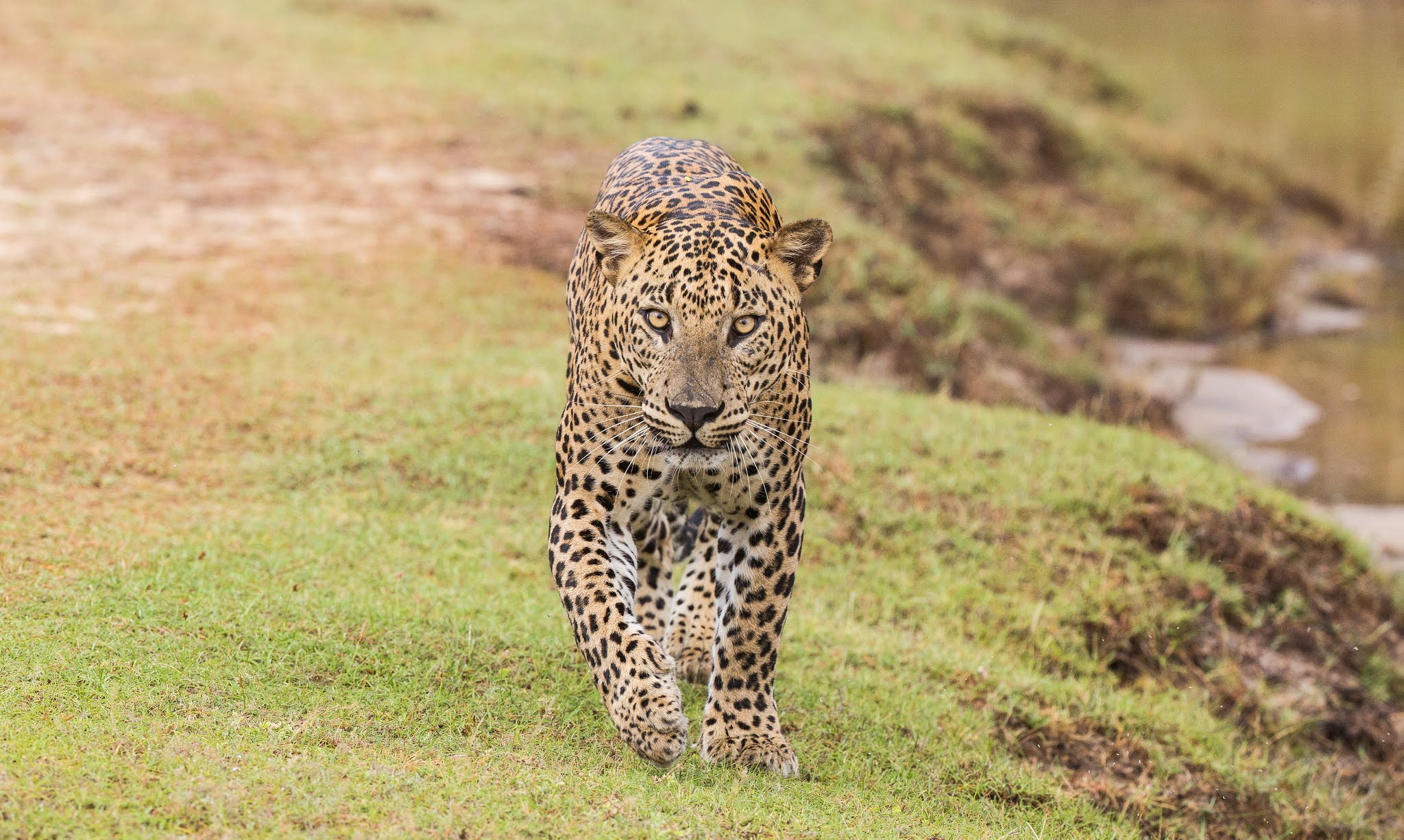
Sri Lanka undoubtedly is the land of the leopard. This is one of the few places in the world where the leopard can claim the moniker of the apex predator of the wilderness. In other continents and countries such as India or Africa, the leopard needs to compete with larger and more formidable predators such as lions, tigers, and even Hyenas in the case of Africa.

In Sri Lanka, there is no such predator to compete with the leopard. The occasional scuffle with a wild boar and a sloth bear has been known to occur, but overall the leopards are free to hunt and feed unabated.

This level of freedom has further enabled some of the best daytime sightings of these magnificent predators on the island. Being the top predator in its habitat the leopards are more confident and can be seen out in the open, completely relaxed.

The Sri Lanka Leopard is a unique subspecies that is native to this island. They are also the largest subspecies along with the Iranian Leopard. For a trained eye, one can easily spot the difference between for example an African Leopard and a Sri Lankan Leopard. The facial structure and coloration are the key differentiators.

Hence for anyone who is keen on covering as many species and subspecies as possible, it is important to visit Sri Lanka and try and photograph and see the Sri Lankan Leopard.

That being the case, the question would arise which is the best place to see leopards in Sri Lanka?

This is a worthy question as Leopards are found in many parts of the island, but they are not seen as well in all places, especially in areas where they are not habituated.

This too is important as habituation to humans and vehicles is key in having great leopard sightings.

From decades of observation and hours spent in the field here are my top 5 places to see leopards in Sri Lanka


#1 – Yala National Park (Block 1)

Undoubtedly the top spot has to go to Yala National Park, the crown jewel of safari parks in the country. This is truly the land of the leopard, with some of the highest if not the highest densities of these amazing predators in the world. The sightings of a beautiful cat walking across the open plains or atop a rocky outcrop is a signature sight in Yala National Park. There are many famous leopards that have become household names in Yala. In the past big males such as the “Chaitya Male” (known to have been big and strong enough to bring down an adult buffalo) and Hamu was iconic. At present, a very detailed study on the leopards of the park are being carried out whereby over 130 individual leopards have been identified. Even now, new individuals keen getting identified, which showcases the vast density of these predators in such as small area which is only 142 Square Kilometers. Some of the notable characters during the present era to emerge from Yala are – Lucas, Julius, Harak Hora, and Aster to name a few. A very informative “Leopard Center” is present in the park where visitors can learn more about these predators and also compare one’s own sightings with the virtual database and try and identify the leopards they have spotted while on safari.


#2- Wilpattu National Park

The land of lakes, Wilpattu is located on the North-Western end of the island. This is Sri Lanka’s largest national park and is quite a contrast to the landscape of Yala. Where Yala is mostly dry scrub forest, open lagoons, and plains, as well as many rocky outcrops, Wilpattu is denser with dark forests being the dominant landscape, along with few open spaces which are usually consisting of natural lakes known as Villus. The dense dark forests make it quite difficult to see these predators, but when they do come onto the roads it is a sight to behold. The open sand-brimmed lakes are some of the most beautiful settings to view these magnificent predators. The park was closed for many years during the time of the civil war and was finally opened to the public in 2010. During this time, the leopards were very shy and sightings were almost nonexistent. But over time, after a few years of continuous visitation, the leopards gradually became habituated enough to give some great sightings. Through the years, Wilpattu has become increasingly popular, especially with wildlife purists who seek more private and quieter moments compared to Yala which can tend to be congested and crowded. The chances of seeking leopards in Wilpattu is somewhat harder than Yala, but usually, the reward of the sighting is far greater most of the time due to the lower numbers in the park and the ability to spread out across the landscape given the size of the park. One of the most photographed leopards from back in the day was the infamous “Prince” a.k.a “Natta” who was a young male leopard who was born in the Kompanchi Sampuwal/Pomparippu area and later moved around to many parts of the park. He was at one time the most photographed leopard in Sri Lanka, giving shows like no other, often sleeping in the middle of the road paying no need to the on-looking people and vehicles. He was named Natta due to the fact that the end of his tail fell off due to an injury probably with a wild boar or another leopard. He is still alive but has been driven out to the fringes of the park by larger and more dominant males. One of the most famous and well-loved males of the park is the Nelum Wila Male, a massive individual who has a large home range and is seen quite often walking without fear of people. He is the current star of the park and one who literally poses for the photograph. When it comes to the female’s one of the most beloved leopards has to be “Cleopatra” the beautiful female who was known as a playful cub from Borupanwila. Now a successful mother with her own brood of cubs is seen by lucky visitors mostly in the Mahapatessa area with her cubs.


#3 Kumana National Park


Kumana, the land of mystery and awe is located on the far eastern corner of the island. In fact, it is connected to Yala and is part of the same ecosystem. But due to the access and location, it is quite a long drive to reach compared to Yala. Kumana was initially famous as a bird sanctuary with many species of birds nesting in the waters of Kumana Villu. But in the last decade or so, there has been an increasing number of leopard sightings in the park. The legends say the leopards of Kumana are known “man-eaters” and the leopards of Lenama (an area in the park) are mythically known to be larger and deadlier. But the reality is that these too are the same leopards that you see in Yala. But there have been cases of man-eaters in the park which are more than in many other parts of the island. In 2019 a construction worker was taken and eaten by a large male, who subsequently attacked and severely injured another individual who went to retrieve the body of the victim. Thereafter in 2020, another leopard attacked a farmer in the nearby area of Panama while sleeping in his watch hut. The man succumbed to his injuries. The same leopard thereafter attacked a few men on patrol at night in the fringes of their farms. The authorities managed to capture the culprit who was released deep inside the park which caused much controversy.

Despite these individual cases, the number of sightings of leopards is increasing as the animals become more habituated. The advantage of seeing leopards in Kumana is the privacy and lack of large crowds. Given the remoteness and difficulty to get to the park has resulted in making this one of Sri Lanka’s best-kept secrets.


#4 Veheragala (Yala Block 5)


Veheragala National Park also known as Yala Block 5 became popular in the last 6 years as an alternative to Yala Block 5. The small land extends borders the giant Veheragala reservoir and is less visited than its more famous counterpart. This park is also known for its fair number of leopards, often seen on the main road which runs through the park. The high density of prey animals such as Spotted Deer and Grey Langur may have resulted in the number of leopards seen, and gradual habituation has helped greatly in giving quality sightings. This is a great park to combine with when visiting Block 1 in order to get away from crowds and to get a change in landscape.


#5 Horton Plains National Park


The misty highlands of Sri Lanka is hardly a place one would imagine encountering a leopard but despite this, historically the highlands was where most of the islands forest cover was and where most of the wildlife animals roamed. With the onset of the British taking over the country, they cleared these vast forests, to grow Coffee and subsequently Tea.

One of the last remaining highland wilderness refuges is Horton Plains, National Park. Located over 2500 meters above sea level this montane wilderness is set atop a high plateau and is one of Mother Nature’s spectacular wonders.

Once even used by the government at the time to grow potatoes, it was later declared a National Park and a UNESCO World Heritage Site.

This land is one of the most sensitive and ecologically important locations in the country with a vast number of plant and animal life endemic and found nowhere else in the world.

The park was very popular for its scenic landscapes and walking trails. Subsequently was highly valued as a top birding destination to see some of the rare highland endemic species.

In the last few years, through countless visits and patience, this too has produced some unforgettable leopard encounters.

The kings of this domain, these predators are found in the deep dense cloud forests and on the fringes of the open plains which are the main landscapes of this habitat.

Feeding primarily on Sambhur the largest species of deer in Sri Lanka these cats seem to have a few physiological differences to their lowland cousins. The Horton Plains Leopards seem to be much larger in physical size and their faces wider with shorter muzzle areas giving them a stouter and wider look.

A study carried out by a a scientific team consisting of Dr Enoka Kudavidanage in 2020 has identified 23 adult leopards found in the park.

Seeing these majestic predators is much harder than in the lowlands but with a trained eye and patience you might have a chance in getting a glimpse of these highland beauties.  


Sunday, April 5, 2020

Leopard in Udawalawe

Around 7 years ago , I got news of a female leopard with some cubs being sighted in Udawalawe National Park. This park is more famous for its elephants, and seeing a leopard is an absolute rarity. The chance of seeing one would be a great opportunity, and hence myself and my friend Hamid decided to go on a day trip to the park early morning and try our luck.

We decided to drive into the park in Hamid's pickup rather than hiring a jeep. We set into the park early morning with some packed breakfast. We reached the rocky outcrop where the leopards were said to be sighted. It was a very tough place to spot anything as besides the rock, the surroundings were covered in 6-7 foot tall elephant grass. Hence we had to focus solely on the rock.

Waiting hours, we had no sighting whatsoever. We decided to head back out as the sun was getting quite hot, and have some lunch before returning back.

Back in the evening, we waited for a very long time circling the rock, and looking at all possible directions for a sighting. While doing the circle, suddenly one vehicle up front said the leopard just crossed the road from the side of the rock to the other side , into the tall grass.


We drove past where the alleged crossing had occurred and waited. Suddenly Hamid spotted the leopard peering from the edge of the grass from his rear view mirror. As we had no time to turn around I opened the door slightly and put my lens out. I caught a glimpse of the leopard hiding in the grass. The angle which I was turning aroound and holding the heavy lens gave me a massive cramp on my torse, but I gritted my teeth and waited , expecting it to cross the road.


But before I could even click my camera the young leopard dashed across like Grease Lighting !

Back in the car, I was wincing in pain from the cramp, and checked my camera thereafter. I had managed to catch only one shot of the cat peering through the bush, the crossing was too fast. But I was not upset as I was very happy in seeing a leopard finally in Udawalawe which is one of the rarest sightings one could get.


Saturday, April 4, 2020

Jungle Cats of Udawalawe

The Jungle Cat, one of the most elusive and rare felines found on the island. Very few people are even aware of its existence, and yet they are found in most parts of rural Sri Lanka.

At first glance , you might mistake it for a normal house cat, but looking closer you will notice, its taller and long legged, as well as having a uniform sandy, reddish brown fur. and noticeable ear tufts which are not seen in regular house cats.

Very keen to see this rare cat during daytime, I was advised to head to Udawalawe to try my luck. With this in mind I made plans to visit with my friends Sapumal and Madhawa.

I managed to get the services of a very experienced tracker in Lionel and a superb jeep driver in Sanath to help us in our search. They were not full optimistic, but said we will try nevertheless.

Heading to the Maw Ara area we were on the lookout for any signs of the cats. Lionel taught me to look out for the chirping of birds in alarm, which is usually the signal the cat is around. Similar to the alarm calls we usually hear from the Spotted Deer and Grey Langur for the presence of a Leopard, in this case we had to wait and listen to the small birds.

As advised, we noticed the sudden flock alarm calls, and we waited. It took an eternity but our driver and tracker both advised us to be patient. And as predicted about an hour later, out came an adult Jungle Cat and her kitten. They were so fast and going in an out of the reeds and bushes, I could not get a clear shot. Before I knew it, they were gone.

Sad about missing the photograph, but happy at the same time in finally catching a glimpse of these beautiful cats, I was determined to try and find one the next morning.

Setting back into the park the next day we scoured the area and could not get any luck in spotting a cat, until mid day, when we were about to head back out, we came across a cat walking along the road in front of us. It was quite a distance away and we did not want to alarm it so we kept our distance and followed. The cat kept walking along the jeep trail and kept looking back at us, before slipping into the tall reeds and dissapearing out of sight. Sadly this time around as well I missed getting a photograph.

Few months later, I was determined to return back to the park and try again. This time I was alone, and went with my chauffer Sampath. On the first day into the park, we saw no cats, but rather many elephants. The next day morning, we headed back in early as possible, and came across a cat which slipped into the bush, but managed to look back at me for a few seconds before dissapearing.


We stopped on the road side for breakfast, and waited. The sun was blazing by this time and we decided to head back out. While driving along, Sampath told me he saw something sleeping underneath a bush. Skeptical I asked Sanath the jeep driver to reverse back. To my surprise it was a jungle cat, fast asleep in the shade. We waited and enjoyed our private time with this feline in slumber. Suddenly an approaching jeep's racing engine work the startled cat, who gave as a look for a few seconds before slipping back in to the bush, but gave me enough time for some photographs.


Elated, I left the park knowing how special and rare a daytime sighting of this predominantly nocturnal cat is'.


Memories- My first visit to Yala National Park


Yala or Ruhunu National Park is the most famous Safari destination in Sri Lanka. The park was out of bounds for a few years due to a terrorist attack in 1996, therefore even after Yala was re opened to the public the school did not want take any risks by taking young school chindren into a place with another possible terrorist threat. I had heard so many stories about Yala, and had seen many old black and white photographs of my mothers trip to the park. Finally during the April holidays of 2000, I was able to go to park which I have heard so much about. For me, this was a big step up from what I was used to. The parks I used to visit at the time, Wasgamuwa, Udawalawe and Bundala all had elephants, but we hardly saw other animals. Even the deer were very shy in these other parks, thus it was a big surprise for me to see so many spotted deer in such close proximity, and being so used to vehicles. It was also the first time I saw wild boar.


We camped at Jamburagala Camp Site, which had a small cement structure, thus not requiring tents. Water was supplied by a well some distance away for water. We were strictly instructed not to go to the well alone as the place was next to some rocky outcrops which were frequented by bears. I remember the well being very stale and the water was very brackish with small shrimp like crustaceans floating on the surface. That evening at around 10.00 PM we heard the unmistakable rumble of an elephant very close to the camp site. Mr. Rohan one of our school masters who joined us on the trip was sleeping in the jeep closest to the elephant. Nirmal Sir had warned us of the phobia Mr Rohan had of elephants. I slowly woke him and whispered that there is an elephant close by. He yelped in fright and scrambled from the back seat into the front seat of the jeep, and from there made a hasty retreat towards the building. The elephant clearly frightened by the noise went on it way. We were in fits of laughter, as Mr. Rohan on other occasions was a very tough individual.


The next day morning we were driving along Uraniya road, and while taking a bend came face to face with a tusker. This was my first tusker in the wild and I was extremely excited. This tusker was named Anuradha and I couldn’t believe my luck, a tusker on my first park round in Yala. We had a face off for a few minutes, and then the tusker went on its way into the bush. Still buzzing with excitement from the encounter I had a hearty breakfast and worked on the camp chores till evening. In the evening round while heading back to the campsite from an uneventful safari I encountered my first leopard on the middle of the road in Jaburagala. It was a large male, and after snarling at the lights of the jeep (it was pitch dark), it started walking along the road, and we followed it, for some distance before it slunk into the darkness of the forest. I was beyond words by then a tusker and leopard in one day was something I could never have imagined back then.  


That night we were all in a jubilant mood, and Nirmal sir seemed to be a little at ease as well , and allowed us to bathe at the well for a little longer than normally allowed. I was given a small camp bed by my friend Bimantha, and I remember it being so flimsy that it would collapse down if I moved too much, and I slept very carefully because Rohan Uncle was sleeping on the floor next to me and as he was very irritable I did not want to upset him. I slept soundly and in the morning I tried to slowly get off the bed and  quietly step over the sleeping Rohan Uncle, but suddenly the bed gave way and  it collapsed with Rohan Uncle underneath. I believe he would have had the shock of his life and the bed with all my weight fell on top of him. I swiftly jumped off him and darted out to the open before he could catch me. I heard him loudly cursing back at the scene of the incident, and I hid from him for the rest of the day.


The next few days we saw one more tusker on the main road. Its name was Kublai Khan after the great Mongol Emperor. It gave a small mock charge and thereafter remained on the road for more than 30 minutes, so we turned back and headed the other direction. We also took part in a small project where we put up sign boards along the Palatupana road warning vehicles of crossing animals and urging them to slow down. This was due to a request made by the park warden as many animals, especially small ones such as monitor lizards and black naped hare, were being run down. We were also given a lecture about the park by one of the senior rangers who visited our campsite. Back then I maintained a field book with notes on all my sightings, and learning’s from each trip.


My first visit to Yala will never be forgotten and will be the first of many visits to this amazing park.

Friday, April 3, 2020

The Mighty Sando


Sando , the name alone brings shivers to anyone who has encountered him. He is the most dominant and aggressive tusker in Yala National Park. So aggressive, hes single handedly responsible for ramming many safari jeeps and chasing down even more.

He is said to be responsible for brutally attacking other bull elephants including Gemunu the famous tusker of Yala.

He appears in Yala when hes in musth, which is a heightened state of aggression male elephants come to when their testosterone levels are elevated and is the time they are most aggressive and are seeking mates. During this time, bulls don’t think about food, and are always agitated and on the move looking for females in estrous or in season. Males in musth usually secrete a pungent oily substances from the sides of their cheeks and dribble urine constantly. Studies have shown that when bulls reach musth they are able to compete and dominate other males even those bigger than them to win a chance to mate.

Sando was named because, he had smashed an Irrigation Department double cab in a lake close to Yala Block III few years ago. And hes been visiting Yala Block I every time he comes into musth.
He was even sighted in Kumana where he had whacked a jeep two years ago. Hence his range is quite vast and you never know where he would turn up.

I have been wanting to see this giant tusker for quite some time. I remember heading to Yala in 2014 after hearing of his appearance. But not having any luck. The same happened in the following years, and I was thinking what bad luck I had given everyone else who headed to Yala had a close encounter with this giant.

Finally in 2019, we set off with hopes of finding him. On our first evening safari we saw him at quite a distance with some females, but could not get a clear shot. It was amazing to see so many vehicles lined up and watching him, knowing his fearsome reputation.

The next day morning we headed back in quite early, and entered from the Katagamuwa side, and while driving on towards the Yala junction we got news hes been spotted close to Komawewa on the main road. Heading to the location we just missed him as we saw his massive behind disappearing into the bush. We turned into Komawewa and took the road towards Suduwelimulla, when we came across him on the road, but walking extremely fast towards the bush. We could not get a good sight of him as he disappeared once again.

We turned onto the main road once again, and from the Diganwala area a jeep flashed their lights, and our drive excitedly sped on the road towards the jeep, not knowing what this guy was signaling about. To our shock Sando was on the move and about to cross the road from the start of Diganwala, which was blind to us on the left, and luckily passed him fast, as if we had stopped in front on him he would have surely rammed onto the jeep and toppled us.

He crossed the road and walked briskly to the other side. He was in a daze and was walking all over the place. We headed to Kota Siyambala area hoping to anticipate him appearing from that side , and waited for quite some time with no luck.

Thereafter we thought, maybe he has walked towards Medha Para and hence headed back towards that area. As soon as we turned to Medha Para, there he was, and was walking straight towards us. The driver froze, and we watched in awe at this colossus coming straight towards us. After a few seconds our driver decided its too close for comfort and began backing up and Sando kept on coming, until he decided to swerve to the right and go deep into the bush.


It was such an exciting sighting and we were left in awe at this majestic bull tusker. Seeing him finally was amazing and I have to say this is one of the most exciting moments I have had in Yala.


Sunday, March 29, 2020

Kabini- A Venture into Nagarhole National Park

Nagarhole National Park, popularly known as Kabini due to the Kabini River, is a very popular wildlife destination in India, and famed for its sightings of a rare individual leopard with Melanism, also known commonly as a Black Panther or Black Leopard.

I organized a tour to visit this park in December 2019, and along with a group of 10 clients, set off from Colombo.

The flight was very short, and we reached Bangalore airport in 1 hour.

We landed at 2.30 AM and thereafter had a long 5 hour drive to Kabini River Lodge, which was our abode for the next 4 days

En-route we stopped over at Mysore for breakfast and reached the lodge by around 11.30 AM. The reception area onwards we could see the beautiful sprawling campus that is Kabini River Lodge. Once the personal hunting lodge of the Maharaja of Mysore, it was a very charming property with old buildings and a colonial nostalgic feel to the whole place. After check in processes were done, a naturalist gave a tour of the lodge and its schedules. The entire safari program is managed by the lodge and is scheduled.

 The Reception

 Jeewaka making fun of me for eating the cutlets Ranee made for us

 The old colonial buildings were quite charming

 Beautiful Sprawling Campus


Waiting to check in

Our rooms were charming tented cottages, which were very clean and neat. The meals are served in a restaurant area, with a large spread of Indian cuisine. Thereafter tea is served at 3.00 PM followed by the jeep safari. Allocations of the vehicles and park zones we are to visit are all determined by the Lodge.


Our group were assigned 2 jeeps, which were very comfortable and spacious.  Infact these were the most comfortable jeeps I have ever been in.

The naturalist for my jeep was Wijay and our driver was Amjad, both worked together to get us the best sightings possible. They were top class guides and infact the best I have seen in India.

Wijay and Amjad

Our first venture was to the A Zone, which is best known for the Black Panther, as soon as we entered, I noticed the thick and tall foliage and trees, which were very interesting. There were open fire lines which ran across the zone, which gives a long range view. In one of these fire lines I saw a very large tusker and urged Amjad to drive towards him. It was a very impressive animal with thick long ivory. Initially I thought this was the famous Mr Kabini who had the most impressive ivory I have seen from an Asian Elephant, but it wasnt as this was a younger elephant. But nevertheless the tuskers in Kabini are far more impressive than the ones we see in Sri Lanka. The tusker quenched his thirst by the nearby water source and continued feeding on the grass.


We moved on, and continued our search. I noticed the sheer determination and observations of both driver and tracker which truly impressed me.

We turned on to a forested path, where we stopped and lied in wait as we heard the alarm calls of the Grey Langur's . After waiting around 20 minutes Wijay noticed a leopard coming out into the open, it was a female, and in a flash it crossed the road and dissapeared into the bush. Continuing our drive, we came across a large herd of elephants. It was impressive to note even in this herd we observed two young tuskers. On our way out, we came across the largest Indian Bison or Gaur which I had ever seen. Unfortunately the light was so low, I could not capture a good photograph. But the muscles and sheer size of this animal was very impressive.


Returning back to the lodge we were welcomed with tea and snacks and at night a very impressive dinner. This was truly a world class lodge, and a place which was very well managed. It is surprising to note its a state run property and yet so well managed.

Early the next day we headed on our second safari to the A Zone, we observed a mixed flock of birds, we simply switched our engines off and observed the many calls. We noticed there were quite a number of Raquet Tailed Drongo's among this flock.


The park it self is full of life with many Spotted Deer, Grey Langur, and Wild Boar roaming around.


Back at the lodge we enjoyed a lovely breakfast and spent the remainder of the day at leisure until our next Safari time.

That evening we ventured once again to the B zone and headed to a known water hole where Wijay claimed a mother and three semi adult cubs are seen. We waited there for over an hour, in idle waiting for something to happen, but nothing really did. Then another jeep drove towards us and the guides and drivers were having a friendly chat, when the guide of the jeep suddenly shouted out “Tiger, Tiger” and we saw the cat we were looking on further up the road. Driving there, we noticed one tiger walking into the forest, and one remained on the roadside. Not wanting to startle the cat, we waited. It took over quarter of an hour as the cat who was seated near a small mound began walking towards the tree line. Suddenly it did what we never expected, as it climbed a tree. This was unprecedented and I have never come across a case of a tiger climbing a tree, and nor have our guides or drivers. But given their weight and size this is not natural to them unlike leopards, and the cat slowly slid back down, with its hind quarters first, showing its not comfortable with the practice whereas leopards come down head first. Thereafter the young tiger slowly walked towards another tree, scent marked and made itself comfortable and sat and watched us. 


It was a very eventful evening and as it was getting dark we left the beautiful cat and made our way out.  Just as we passed the tiger, we came across a sloth bear on the roadside. This was truly an eventful evening. 


The next day, we went along the park boundary, which was said to be a great place where tigers cross into the village and return back early morning. While driving we got news of a large male tiger asleep in the bush. We rushed to the site and saw the faint stripes and markings but could not get a clear view. We waited for over an hour but there were no signs of the big cat awakening, and hence we left this particular sighting and continued. The safaris itself were very pleasant as the surrounding forest habitats are beautiful and we came across yet another very big tusker. 


 The Tented Cottage at the Lodge


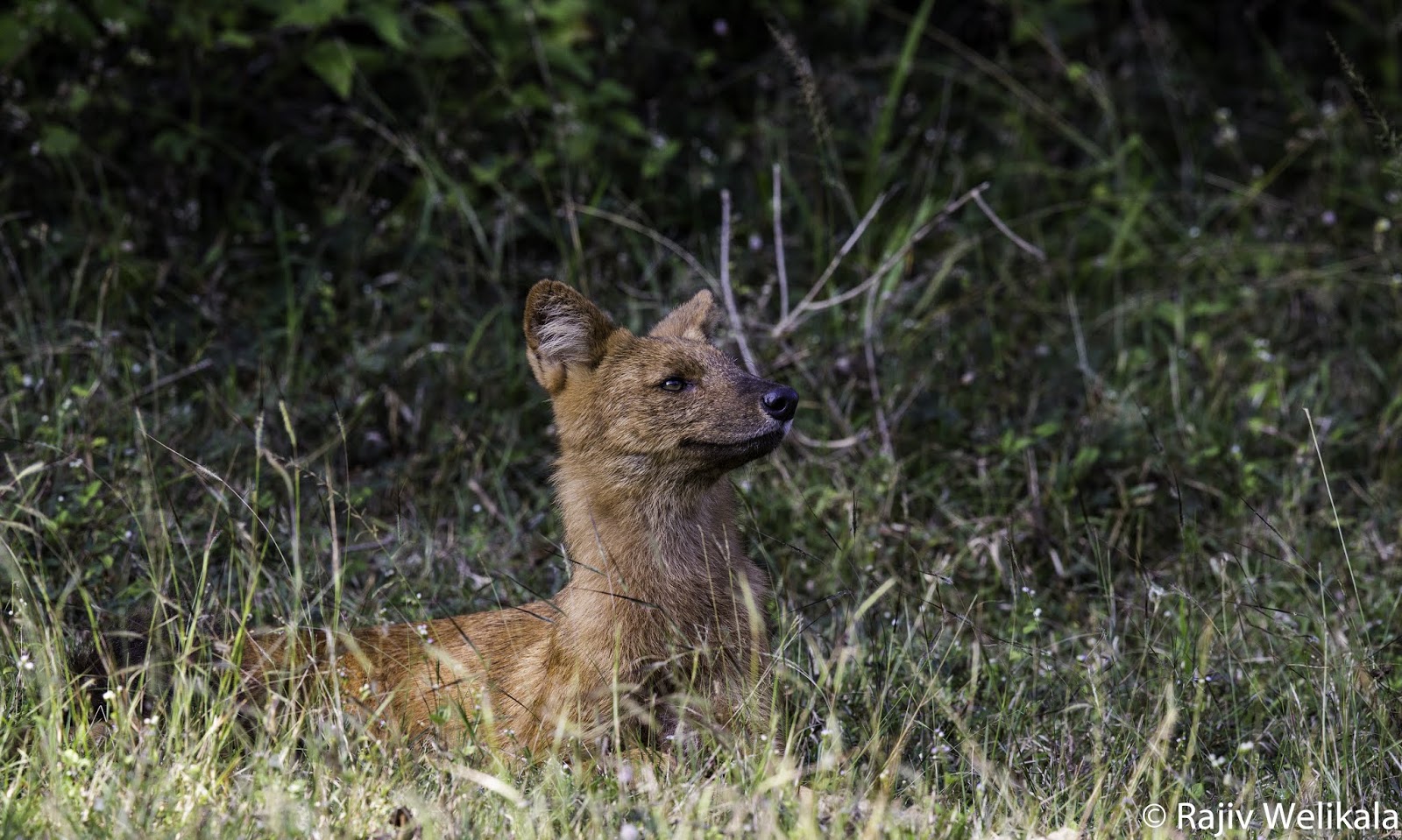
In the afternoon safari, we struck lucky with a pack of 6 Indian Wild Dog or Dhole, who I was dying to see, these tenacious animals are known as the top hunters in the Indian Jungle and known to take down animals much bigger than them. There are reports of super groups of wild dog even taking down tigers. Hence it was a pleasure to get up close with such a formidable predator. The pack was led by an Alpha who had a different coloration with a white underbelly which was not present in the others. When reading up about this it seems the more mature adult dogs have this white underbelly coloration. The unique call they were making was very un dog like, and hard to describe. 


That evening we came across one more tusker who was quite large , and as well as a large single tusker who crossed the forest path. This park truly is one of the best if not the best location I have come across so far for Asian tuskers. 


The next day was relatively uneventful, but we did come across another very large tusker with a female. Back at the lodge that night we celebrated our last night in this beautiful park. 


With Wijay our excellent Tracker

The next day morning safari, proved uneventful for our jeep, but our second jeep ended up in Zone A where they came across another tiger sighting. 

Overall it was sad to leave this place, and I hope to return back to this South Indian wideness paradise. 

With Bheemaiya the senior tracker